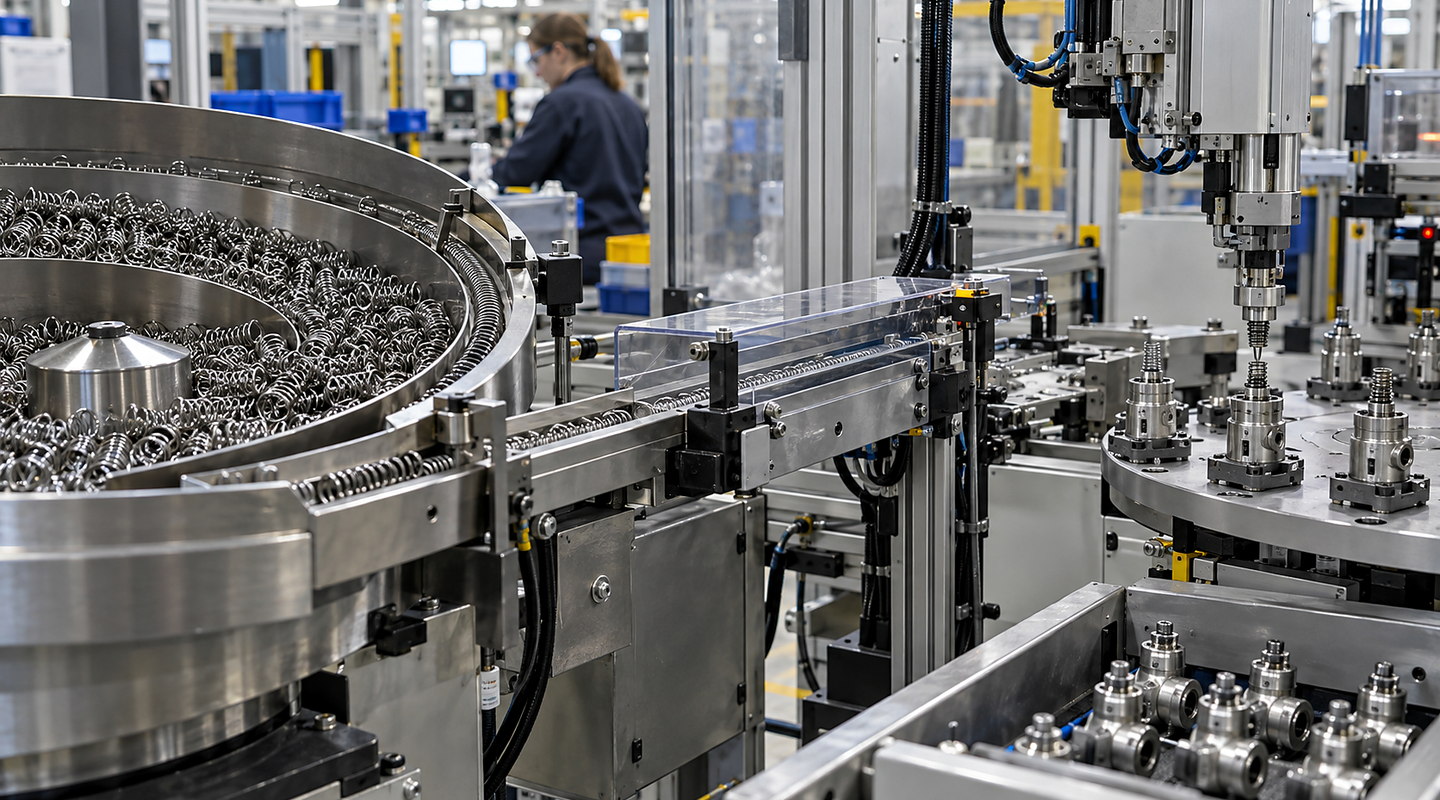
Plastic Component Feeders Selection Guide
Compare plastic component feeder methods using cavity and batch samples, nesting, cosmetic limits, orientation and the downstream pick or assembly interface.
Compare feeder methods using mouldings from the cavities and batches that will reach production. Include accepted dimensional, colour and finish variation; check nesting, orientation features, cosmetic contact and the final pick or assembly interface before choosing the method.
Use the sample and interface brief for comparable trials. The complete feeding sequence distinguishes feeder output from accepted delivery; manual or tray presentation remains an option where bulk handling damages parts or adds unjustified complexity.
Compare options in the conditions where they must work — Plastic Component Feeders
Plan plastic component feeders around real component variation, bulk condition, orientation, usable delivery rate and the downstream interface. Discuss representative part trials with Sorting Solutions. A useful shortlist should show how every option copes with component geometry and variation for moulded-plastic component feeding and escapement and downstream pick interface.
Discuss your application
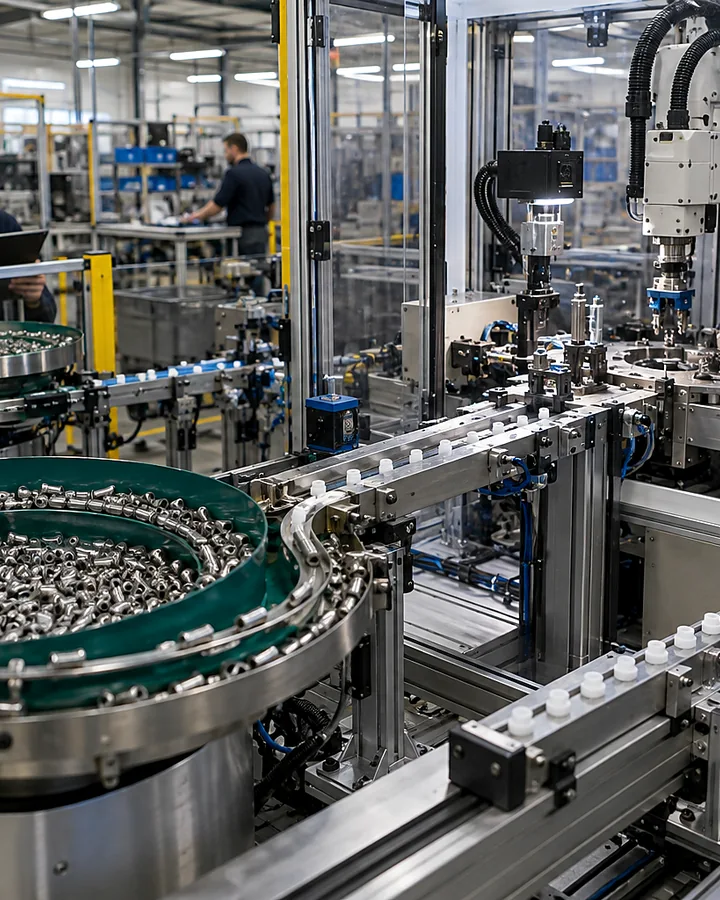
Ask every supplier the same questions
| Decision | What to ask | What to check |
|---|---|---|
| Cavity, batch and drawing variation | Which cavities, production batches and revisions are represented, including accepted dimensional, colour and finish extremes? | Labelled sample sets, drawings and trial results traceable to each variant. |
| Part interactions and contact condition | Do parts nest, overlap, hook together or cling, and which faces must remain free of unacceptable marks? | Incoming bulk observations and before/after condition checks over the complete handling route. |
| Loading and replenishment | How do bags or bins arrive, and what happens at low fill, normal loading and replenishment? | Identified loading conditions, replenishment observations, separation and intervention records. |
| Orientation and accepted delivery | Which feature establishes the required face/end, and how many acceptable parts reach the receiving process in the agreed run? | Orientation and wrong-variant results linked to accepted downstream counts and run conditions. |
| Escapement and assembly pick | What support, position, queue pressure and pick window does the next operation need? | Agreed physical/control interfaces and trials through downstream demand, stops and restarts. |
| Jams, damage and recovery | Which normal, difficult, changeover and fault conditions must be demonstrated? | Agreed checking methods, cosmetic limits, recovery sequence, first accepted parts and unresolved actions. |
Include simpler approaches to moulded-plastic component feeding in your shortlist
| Approach | Often suitable when | Watch for |
|---|---|---|
| Defined bulk-feeding duty | A bounded moulding range and downstream interface can be tested with representative cavity and batch samples. | Record nesting, rejected orientations, cosmetic condition, replenishment and accepted parts at the actual handover. |
| Flexible vision-guided feeding, where suitable | Variation or product mix may justify comparison with flexible presentation after trials with the real parts. | Prove separation and distinguishable orientation features, pick presentation, format changes and recovery; suitability is not assumed for every moulding. |
| Manual or tray presentation | Bulk contact would damage parts, or the production duty does not justify its added complexity. | Compare accepted delivery with operator involvement, ergonomics, replenishment, part condition and the receiving-machine interface. |
Pause before choosing when…
- Only perfect or hand-selected examples of bulk presentation using moulded-plastic component feeding are available.
- No one has defined how jam, damage and recovery acceptance checks will be evaluated.
- The normal range for component geometry and variation for moulded-plastic component feeding is described only as “usually fine” but has not been bounded.
- Your operator, cleaning, maintenance or recovery access has not been considered.
- Quoted performance depends on another machine or data source that is not included.