In brief

Choose moulded-plastic component presentation by how the actual parts separate, orient and reach the receiving machine without unacceptable marks. Compare a defined bulk duty, flexible feeding where suitable and manual/tray presentation using the same sample range and accepted-handover checks.

Use the method selection comparison to build a shortlist and the feeding process review to include replenishment, stops, recovery and variant changes. Part behaviour and the final assembly interface determine which route merits a trial.

On the production floor

Match the solution to your product, part and operating needs — Plastic Component Feeders

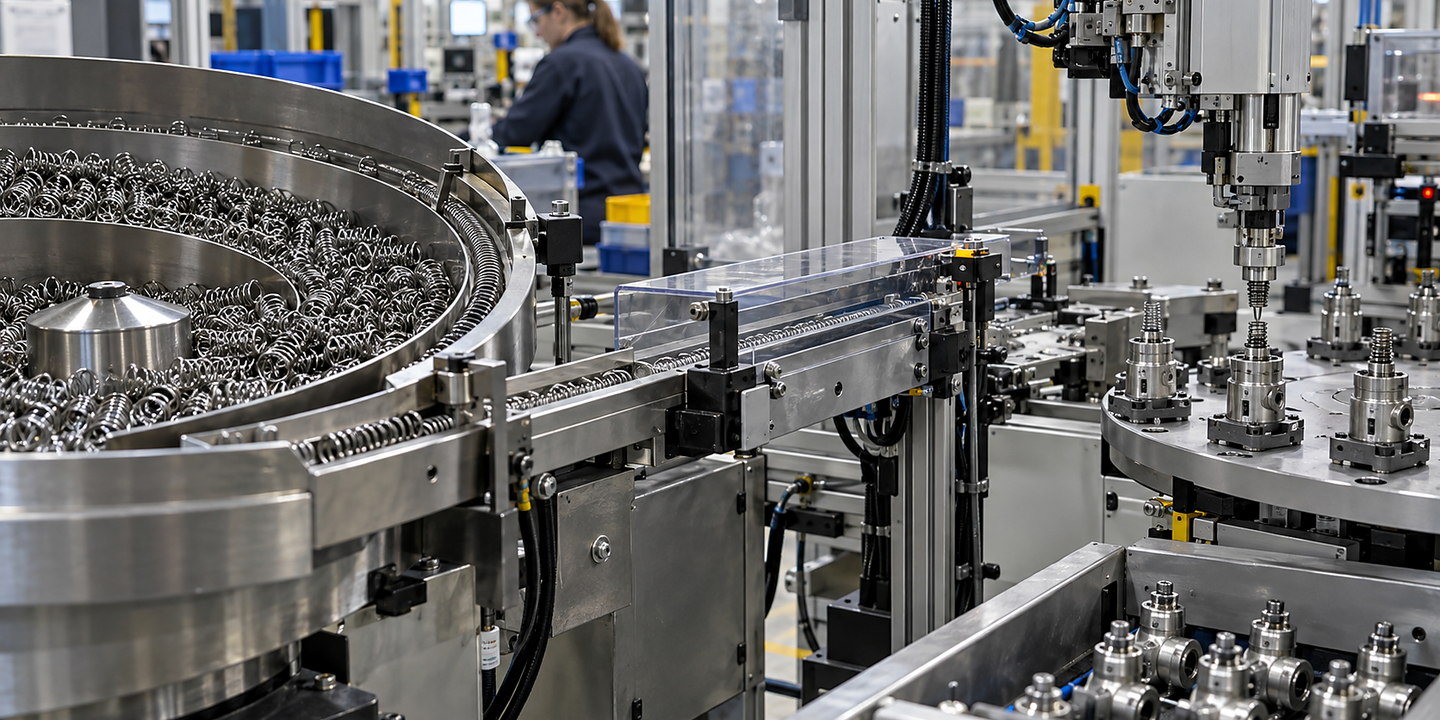
Plan plastic component feeders around real component variation, bulk condition, orientation, usable delivery rate and the downstream interface. Discuss representative part trials with Sorting Solutions. Use the application examples to compare bulk presentation using moulded-plastic component feeding with flexible or metered delivery involving moulded-plastic component feeding.

Discuss your application
Application 1

Bulk Presentation Using Moulded-Plastic Component Feeding

For bulk presentation using moulded-plastic component feeding, start by confirming component geometry and variation for moulded-plastic component feeding, surface, fragility and entanglement behaviour, and bulk condition and replenishment method so the proposed system matches your real production needs.

Explore this application
Application 2

Flexible or Metered Delivery Involving Moulded-Plastic Component Feeding

For flexible or metered delivery involving moulded-plastic component feeding, start by confirming surface, fragility and entanglement behaviour, bulk condition and replenishment method, and required orientation and delivery rate so the proposed system matches your real production needs.

Explore this application
Choose the right route

Four questions that can change the recommended approach

What arrives?

Describe the real range for component geometry and variation for moulded-plastic component feeding and surface, fragility and entanglement behaviour, plus presentation and upstream controls—not just a nominal drawing.

What must happen?

Define the required outcome for bulk presentation using moulded-plastic component feeding, the allowed window and what your team can recover without outside help.

What surrounds it?

Record the space, services, neighbouring equipment, people, cleaning and data connections around flexible or metered delivery involving moulded-plastic component feeding.

What result do you need?

Agree representative trials, difficult samples and the result record for jam, damage and recovery acceptance checks, including who will review it.

ApproachOften suitable whenWatch for
Defined bulk-feeding dutyA bounded moulding range and downstream interface can be tested with representative cavity and batch samples.Record nesting, rejected orientations, cosmetic condition, replenishment and accepted parts at the actual handover.
Flexible vision-guided feeding, where suitableVariation or product mix may justify comparison with flexible presentation after trials with the real parts.Prove separation and distinguishable orientation features, pick presentation, format changes and recovery; suitability is not assumed for every moulding.
Manual or tray presentationBulk contact would damage parts, or the production duty does not justify its added complexity.Compare accepted delivery with operator involvement, ergonomics, replenishment, part condition and the receiving-machine interface.